Chatbot Meltdown: What Happens When AI Meets a URL That Simply Refuses to End

Science has a long tradition of subjecting things to conditions they were never designed to withstand. Crash tests. Stress tests. That one famous experiment where they kept a rubber duck in a wind tunnel for six hours. In that grand tradition of controlled destruction, we at LongDomainLegend decided to do something the tech industry absolutely did not ask for: we fed our domain name — iamtheproudownerofthelongestlongestlongestdomainnameinthisworld.com — to every AI system, voice assistant, and automated parsing tool we could find.
The results were, depending on your perspective, either a hilarious glimpse into the fragility of modern artificial intelligence or a deeply concerning preview of what happens when human creativity outpaces machine comprehension.
We're going with hilarious. The machines can file their complaints in the feedback portal.
Round One: The Voice Assistants
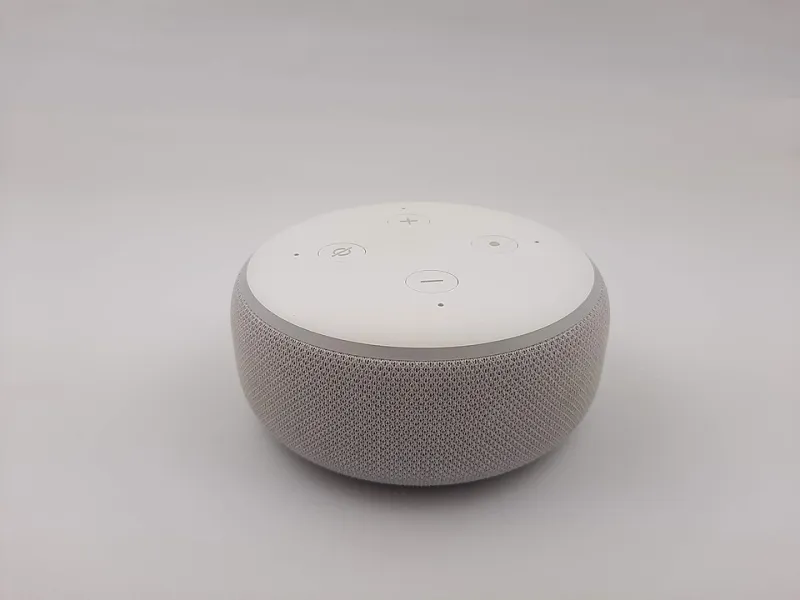
We started with the obvious targets. Three major voice assistants, tested across multiple devices, asked the same simple question: "Navigate to iamtheproudownerofthelongestlongestlongestdomainnameinthisworld.com."
Assistant One responded with confident, unhelpful enthusiasm: "Sure! Here's what I found for 'I am the proud owner of the longest.'" It then read us a Wikipedia summary of something tangentially related to record-keeping. This was not the website. This was not even close to the website.
Assistant Two did something more interesting. It parsed the first half of the domain correctly, then appeared to lose confidence around the third instance of "longest," at which point it said — and this is verbatim — "Did you mean: something else?" Reader, we did not mean something else. We meant exactly what we said. We said it three times.
Assistant Three took a different approach entirely. It read the entire domain back to us, slowly, as though reciting a legal document, then asked: "Would you like me to search for that instead?" When we said yes, it searched for "proud owner of longest domain name world" and surfaced a Reddit thread from 2019 that had nothing to do with us. Genuinely impressive failure.
The pattern across all three was consistent: voice recognition systems are trained on the assumption that domain names are short, pronounceable, and ideally one to three syllables. Our domain is 67 characters long and contains the word "longest" three times in a row, which every natural language processing model apparently interprets as either a stutter, a data error, or a cry for help.
Round Two: The Chatbots
Next up: conversational AI. We asked several leading large language model-based chatbots to help us draft an email containing our domain name. What followed was a graduate-level seminar in machine confusion.
One chatbot, upon receiving the domain, immediately attempted to "clean" it. It flagged the repeated word "longest" as a probable typo and offered to correct it. When we declined the correction and insisted the repetition was intentional, the chatbot accepted this with the digital equivalent of a polite but deeply skeptical nod and proceeded to include only two instances of "longest" in the output anyway. It had opinions. Strong ones.
Another chatbot handled the domain itself fine but then, when asked to estimate the domain's word count for a readability analysis, entered what we can only describe as a philosophical holding pattern. It correctly identified the domain as unusually long, noted that it "may present challenges for user memorability," and then — unprompted — suggested we consider a shorter alternative. We asked it to suggest one. It offered "proudowner.com." We have not recovered from this.
The most remarkable interaction came from a chatbot that, when asked to analyze the SEO implications of our domain, produced a 400-word response that was technically accurate, professionally written, and concluded with the sentence: "That said, this domain name is genuinely unprecedented in length, and standard analytical frameworks may not fully apply." That chatbot gets it. That chatbot has seen things.
Round Three: The Automated Parsing Tools
URL parsers — the backend tools that break web addresses into their component parts for analysis — operate on certain baseline assumptions about the structure of domain names. Maximum character counts. Repetition thresholds. Heuristics built on decades of observing how humans actually name websites.
We are not how humans actually name websites.
One open-source URL parsing library, when fed our domain in a test environment, returned an error message that a developer on our team described as "confused but trying." The library correctly identified the top-level domain (.com) and the subdomain structure (none), but flagged the second-level domain — the iamtheproudownerofthelongestlongestlongest part — as "exceeding recommended length parameters" and appended a warning suggesting the input might be malformed.
It was not malformed. It was just us.
A commercial SEO crawling tool had a more dramatic response. It successfully crawled the domain but then, during its automated keyword extraction process, identified the word "longest" as the page's primary keyword — which it repeated three times in its own analysis report, apparently mirroring our energy. It also flagged the domain itself as a potential spam signal, which is fair, and suggested we consider consolidating our web presence, which is less fair but arguably not wrong.
What This Tells Us About the Future
Here's the part where we're supposed to draw a serious conclusion about AI limitations and the boundaries of machine learning. And there is a real point buried in all of this: automated systems are built around averages. They're optimized for the median case, the expected input, the URL that a reasonable person would type into a browser with a reasonable expectation of reaching a reasonable website.
We are not the median case. We are the edge case that the edge cases use as a cautionary example.
And as AI becomes more embedded in how people navigate, discover, and interact with the web — voice search, AI-powered browsers, automated content summarization — the gap between what machines expect and what humans are capable of inventing will only become more consequential. Our domain is a stress test that nobody scheduled and everyone failed.
But here's the thing: we're still here. Every chatbot that stumbled, every voice assistant that gave up, every parser that filed a formal objection — none of them broke us. We loaded. We rendered. We continued to exist as a functioning website with a functioning URL that you can type, paste, or scream into the void.
The AI will catch up eventually. It always does.
Until then, we'll be over here, breaking things on purpose, in the name of science and extremely poor domain name judgment.